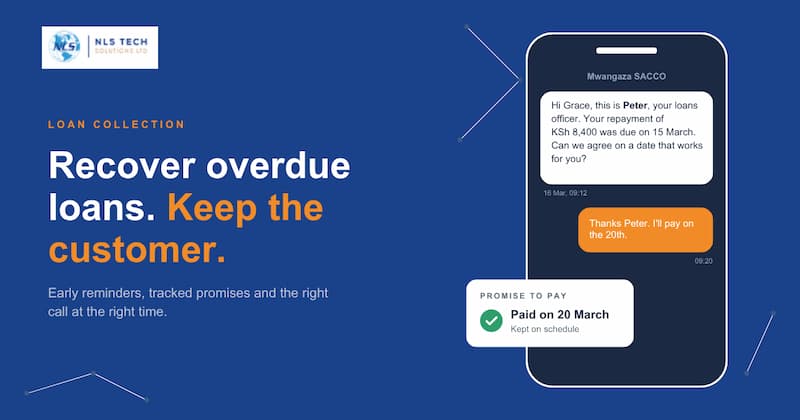

Loan collection works best when it starts early and treats the borrower as a customer worth keeping. Tera Collect, the debt collection system from NLS Tech Solutions, helps banks, SACCOs and microfinance institutions do exactly that. It sends timely reminders, records every promise to pay and tells each officer who to call first. Accounts that need firmer action move to a supervisor automatically.
The result is fewer loans sliding into arrears and fewer customers lost along the way. In this article, we explain why loan collection so often damages relationships. The article follows one borrower and shows how the system works.
Reason Loan Collection Often Costs You the Customer
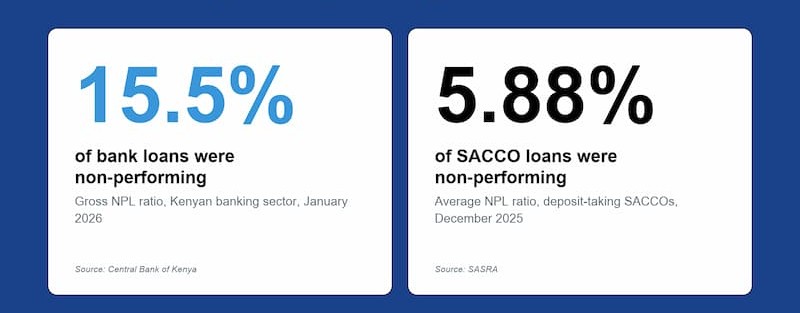
Bad loans weigh heavily on Kenyan lenders. Gross non-performing loans stood at 15.5 percent of bank loans in January 2026. Deposit-taking SACCOs averaged 5.88 percent in December 2025, according to SACCO Societies Regulatory Authority (SASRA). Most borrowers who miss a payment still intend to repay.
Loan collection tends to go wrong in four ways.
- It starts too late. Many teams wait until a loan is a month overdue. By then the borrower owes more and feels less able to catch up.
- Officers work blind. Customer details sit in several systems. Officers lose time searching and often call an old number.
- Promises get forgotten. A borrower promises to pay on Friday. Nobody checks, and the broken promise goes unnoticed for weeks.
- The tone turns harsh. Pressure to hit targets leads to aggressive calls, and the customer stops picking up.
Each of these raises losses and pushes good customers towards other lenders.
Loan Collection: A SACCO Example
Grace is a dairy farmer and SACCO member with a KSh 200,000 development loan. In March, her milk buyer pays late and she misses a repayment.
With manual loan collection, nothing happens for three weeks. Then an officer she has never met calls with a stern warning. Grace feels embarrassed and starts avoiding the SACCO.
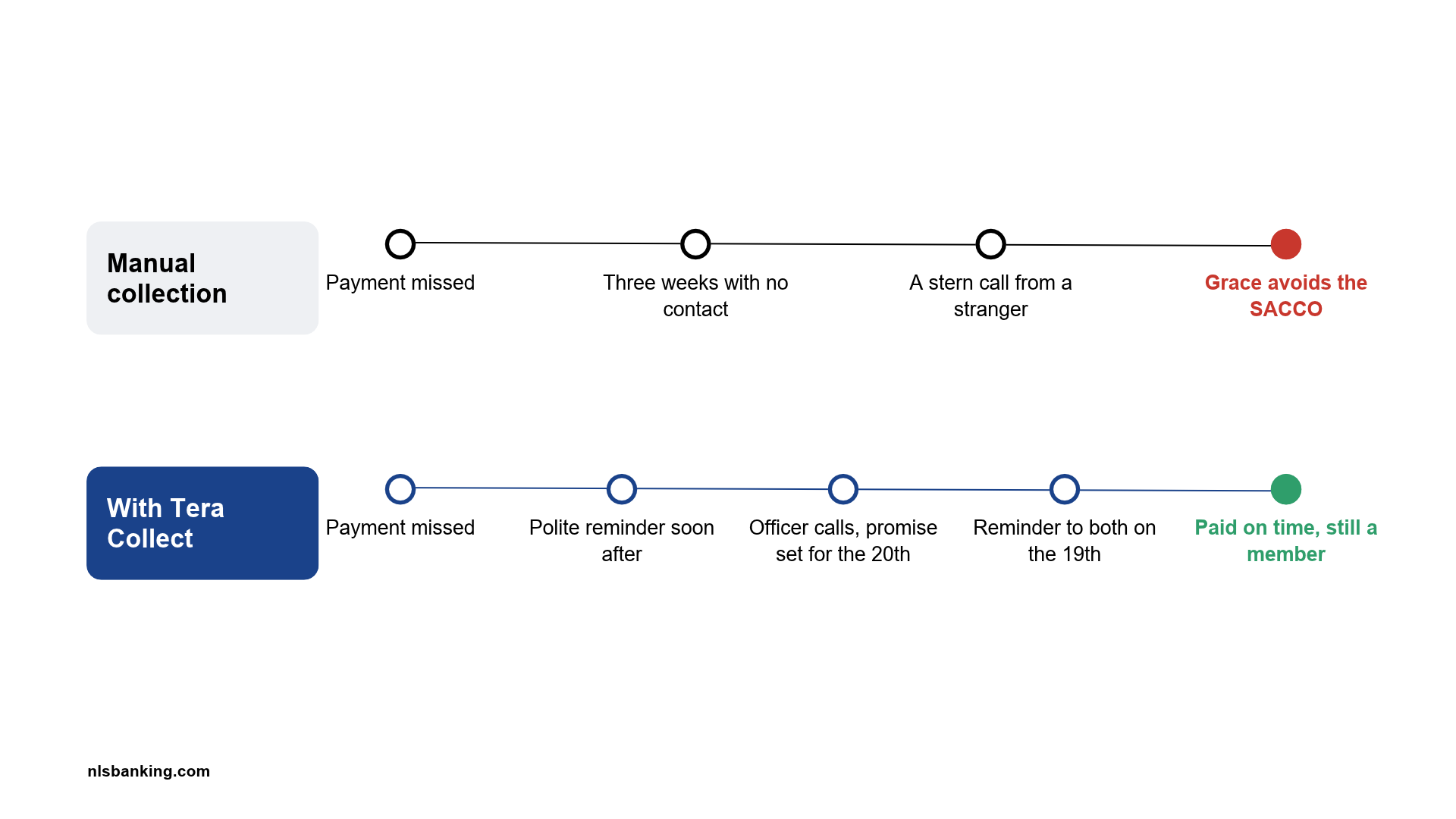
With Tera Collect, Grace gets a polite reminder soon after the due date. Her officer sees the account on a morning list and calls that week. Grace promises to pay on the 20th, and the system records the promise. On the 19th, both Grace and the officer get a reminder. She pays on time and stays a loyal member.
How Loan Collection Works With Tera Collect
The system connects to your core banking system and pulls in loan, guarantor and repayment data in real time. Each officer works from one complete view of the customer. Loan collection then follows six steps.
- Early reminders. Reminders go out automatically based on days in arrears, so many borrowers catch up on their own.
- Automatic assignment. Overdue accounts go to officers by arrears bucket and officer profile.
- Who to call first. Accounts are ranked by likelihood to pay and urgency. Machine learning suggests the best time to call.
- Promise tracking. Every promise to pay is recorded with its date. Officers get a morning email listing promises due.
- Escalation. An account that slips into a worse bucket with no activity moves to a supervisor.
- Finding borrowers. Alternative numbers, employers and relatives help officers reach customers who have moved.
What Does Better Loan Collection Change for Your Institution?
Good loan collection shows up in the numbers and in how customers feel about you.
- More loans cure themselves. Early reminders bring many borrowers back on track before an officer needs to call.
- Officers spend time where it counts. Ranked lists point them to accounts most likely to pay.
- Fewer broken promises slip through. Every promise is tracked, and both sides get a reminder before it falls due.
- Faster recovery. The time from first missed payment to settlement gets shorter.
- Clear team targets. Managers can set and track goals for in-house and external collectors.
- Lower risk of complaints. Every contact attempt is logged, which supports compliance with collection rules.
Most importantly, borrowers like Grace keep banking with you after they recover.
Loan Collection Habits That Keep Customers
A system helps, but loan collection still depends on how your team treats people. These habits make a real difference.
- Contact borrowers in the first week. A short, friendly reminder works better than a firm call a month later.
- Make reminders personal. One study added the loan officer’s name to SMS reminders. Loans still unpaid a month after maturity fell by 41 percent. The effect held for repeat borrowers who knew that officer.
- Ask before you demand. Find out why the payment was missed, then agree on a date the borrower can meet.
- Keep every promise on record. Follow up the day after a promise falls due.
- Match the tone to the stage. Save firm language for borrowers who stop responding.
- Thank borrowers who catch up. A short message after payment builds goodwill for the next loan.
- Review results monthly. Reporting tools show which reminders and call times bring in the most repayments.
Start Recovering More With Better Loan Collection
Every overdue loan is also a customer relationship. Loan collection that starts early, tracks every promise and keeps the tone respectful recovers more money. It also keeps the borrower coming back for the next loan.
Tera Collect gives your collections team the tools to work this way, using the core banking system you already have. To see how it would fit your institution, request a demo from the NLS team.